

Welcome Warblers!
Nothing heralds the beginning of summer like the presence of warblers among the birds
migrating through the Conservancy. Their distinctive calls differ from other songbirds in
their high pitch and rapidity, contributing to the effusive curtain of song that descends on
us in late May.
These insect eaters are especially welcome in our region, with its wetlands and
abundant mosquitos. Their colorful plumage-usually in flashy yellows or splashes of
orange-make them a sight for sore eyes after the gray, rainy days of early spring.
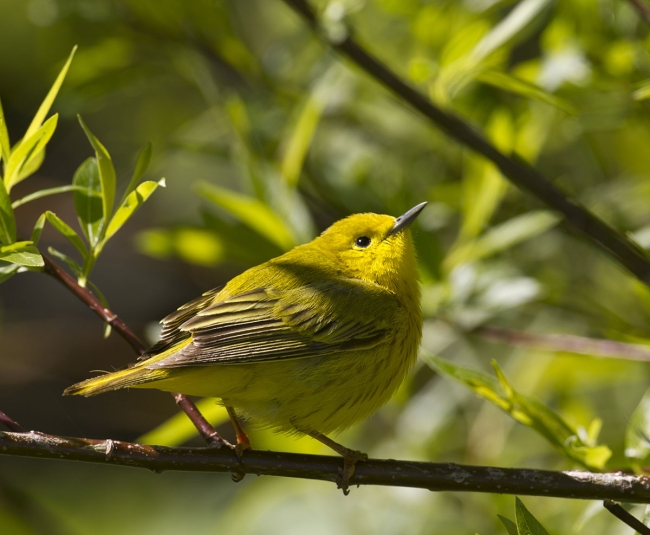
First to come is the Northern Yellow Warbler, virtually the entirety of its plumage a bright
lemon yellow, along with its less brilliant but more populous Common Yellowthroat,
distinctive for its three-quarter time trills. The black-capped Wilson’s Warbler, which like
many warblers breeds primarily in America’s North/Northwest, is the next to arrive, with
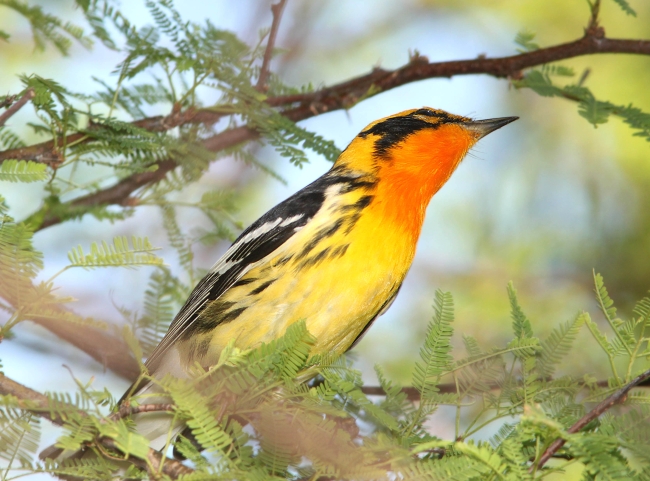
the Tennessee, Magnolia, Mourning, Chestnut-sided, and orange-throated Blackburnian
warblers close behind. We’ve caught glimpses of the less common Black-throated
Green Warbler in the wetlands during hot summers—and the smaller slate-blue-
jacketed Canada Warbler as well.
Many warbler species are threatened by habitat loss and climate change. By one
estimate, the population of North American birds has dropped by 30% in the last five
decades, according to researchers at the University of Wisconsin’s Department of
Forest and Wildlife Ecology. We in southern Wisconsin are fortunate that one oasis for
many warblers is our south-central Savannah habitat, making local conservation efforts
all the more important.
These cheerful denizens of savannah migrate through the DENC on their way to breed
in North America’s cooler climes, then visit us again as they head down to Northern
South and Central America or Caribbean to overwinter.