

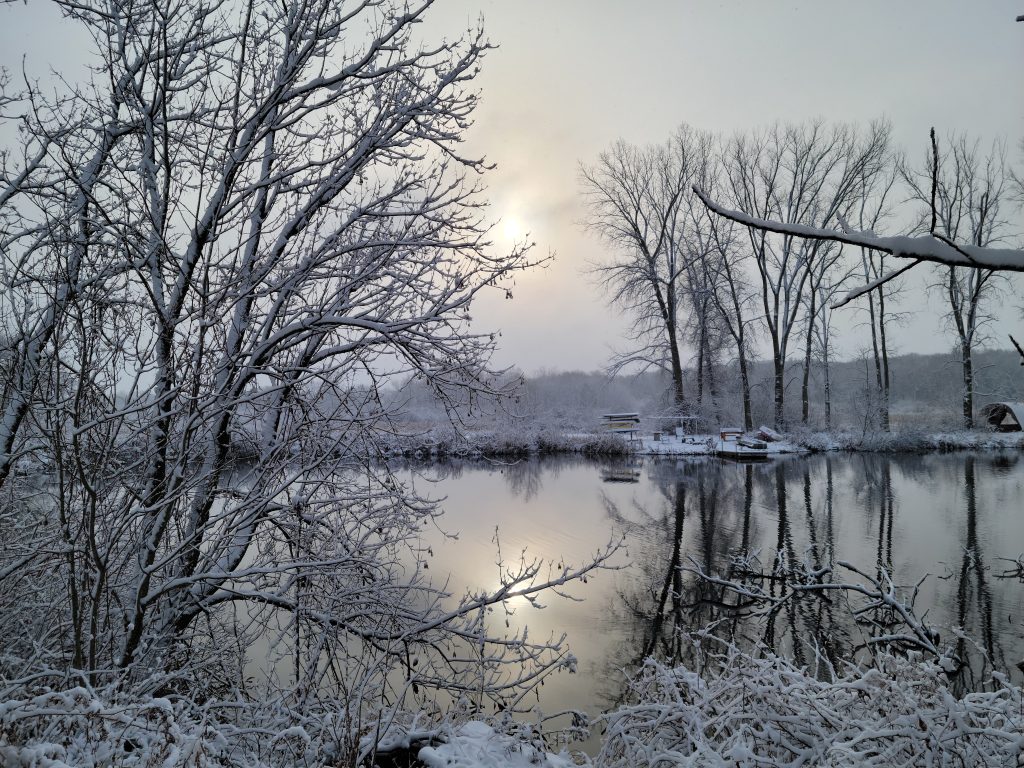
South-central Wisconsin’s first human inhabitants were Paleo-Indians, arriving between 12,000 and 10,000 BCE following the retreating glaciers. Their people lived in small, mobile hunting tribes that moved seasonally across the region, locating their summer and winter camps where game was most abundant. The ancestors of such Native American tribes as the Ho-Chunk and Sauk thrived in Wisconsin’s prairie, savanna, and wetlands for millennia throughout the Archaic period, prior to European contact. The indigenous peoples that called Drift’s Edge their home from 500 BCE to 1200 CE came predominantly from the Woodland tradition. They established permanent villages and cultivated corn, squash, and beans to augment hunting and fishing as a food source. We see evidence at the Conservancy of their — and their ancestors’ — hunter-gatherer lifestyle and legacy in the form of stone artifacts to this day.

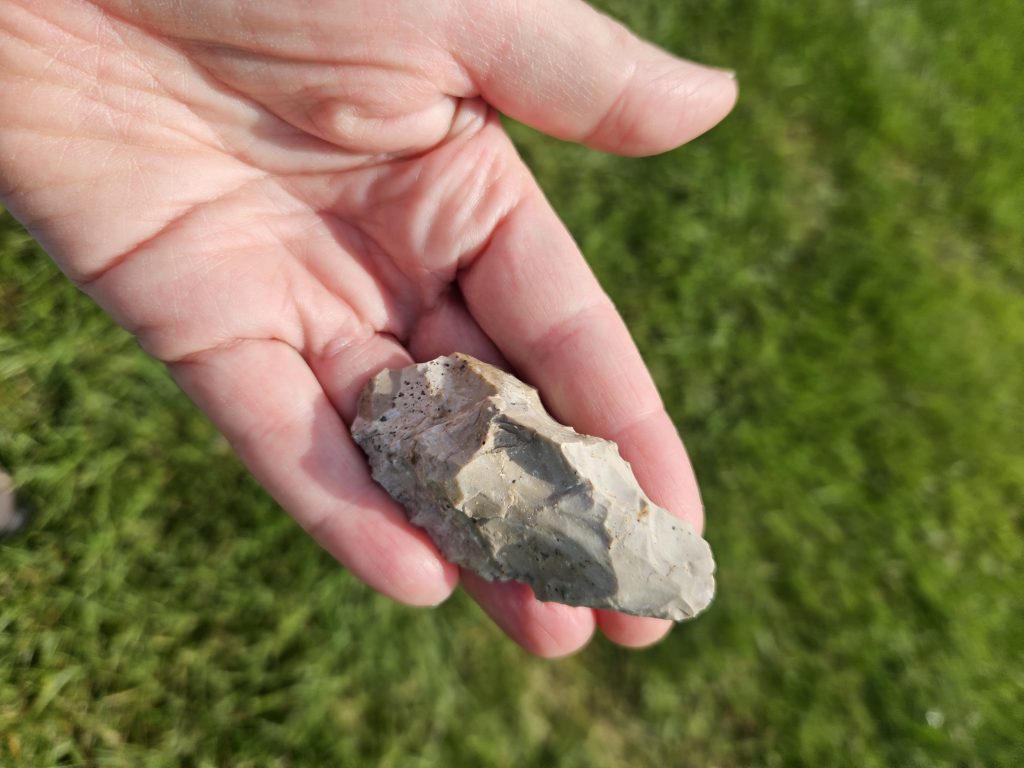
A variety of artifacts, mostly in the form of chert spear points, knives, and arrowheads, can be found across the Conservancy landscape. Keep a close eye on the walking trails in the woods — and the furrows left by plow blades after the fall harvest — if you aspire to find one.

The native Woodland people cultivated crops along the boundaries of wetlands, hunting game and fishing in what we know today as Ross Crossing Creek. A tributary of the Sugar River, the creek is a cold water trout stream that is also home to muskrat, mink, otter, beaver, and endangered species such as the Least Darter.
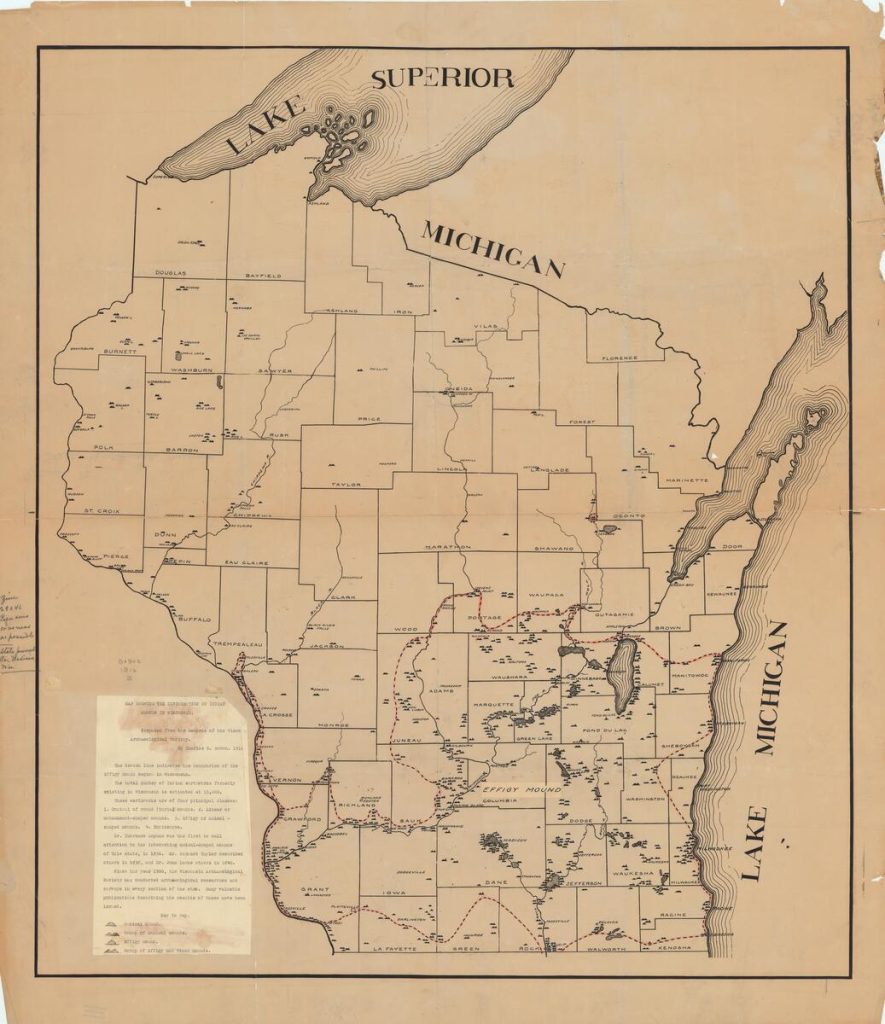
One of their remarkable cultural legacies are the effigy mounds they built on grounds
they considered sacred, which can be found along many of Wisconsin’s most
spectacular waterways.
While French fur traders were the earliest European settlers in Northern Wisconsin, arriving in the early 17th century with their trade filtering down the Mississippi River into Illinois, the earliest Europeans in South-central Wisconsin were largely squatters interested in locating and mining lead. The native Sauk had been mining lead prior to the settlers’ arrival, and competition for that resource and territory became a significant source of tension between the Sauk and Europeans in Exeter and the surrounding area.
In the early 19th century, Ho-Chunk Chief Spotted Arm’s village was situated near present-day Exeter, adjacent to the Conservancy. As Sauk Chief Black Hawk and his tribe attempted to reenter their native territory along the Mississippi at what is now the Illinois/Wisconsin border, the Ho-Chunk were conflicted as to whether to support the Sauk or the U.S. military that had moved the conflict forward on behalf of the government’s Westward expansion. The Ho-Chunk’s fate was decisively determined, however, when the US militia killed over 80% of Black Hawk’s tribe as they attempted to return to their land. They, along with the Sauk, had their land taken from them and were relocated to territory West of the Mississippi in what is now Iowa. The Black Hawk War is considered by historians to be emblematic of the wars used to justify the US government’s policy of Indigenous people’s removal during Westward expansion.
Today, many of Southern Wisconsin’s most scenic roads and parks harbor memorials and other historical markers paying tribute to the war’s impact and symbolic legacy.
Sources: A History of Green County, Wisconsin, Union Publishing Company (Springfield, IL), 1884; and the Wisconsin Historical Society’s Ancient Land, First People’s webpage.